
Be'er Sheva: A Land of Promise Pre-Promised Land
- Kimberly Davis

- May 26, 2025
- 11 min read
Updated: Jun 10, 2025

Be'er Sheva:
A Land of Promise Pre-Promised Land
by Kimberly Davis


Biblical History:
To understand the significance of Be'er Sheva, we must first understand the rich history of the people associated with this land, the promises made regarding this land, and the events that occurred in this land. By gaining wisdom into the backstories, we can see clearly the future that Hashem painted in glimpses throughout the pages of His Torah.
Genesis 12:1-3:
According to Genesis 12:1-3, all nations will be blessed through the seed of Abram that would come from his wife, Sarai's womb. Those who bless Abram and his son of promise (Isaac, aka: Israel) will be blessed and those who curse Abram and his son of promise will be cursed.
Genesis 15:
We read in Genesis 15 about the specific promises that Hashem made to Abraham regarding this son of promise:
That they will be a people more numerous than the stars.
That they will be a people sealed by many covenants made by Hashem to bless this people.
That they will be enslaved in a land they do not know for 400 years.
According to Hashem's promise in Genesis 15:
בַּיּ֣וֹם הַה֗וּא כָּרַ֧ת יְהֹוָ֛ה אֶת־אַבְרָ֖ם בְּרִ֣ית לֵאמֹ֑ר לְזַרְעֲךָ֗ נָתַ֙תִּי֙ אֶת־הָאָ֣רֶץ הַזֹּ֔את מִנְּהַ֣ר מִצְרַ֔יִם עַד־הַנָּהָ֥ר הַגָּדֹ֖ל נְהַר־פְּרָֽת׃
On that day יהוה made a covenant with Abram: “To your offspring I assign this land, from the river of Egypt to the great river, the river Euphrates—
אֶת־הַקֵּינִי֙ וְאֶת־הַקְּנִזִּ֔י וְאֵ֖ת הַקַּדְמֹנִֽי׃
the Kenites, the Kenizzites, the Kadmonites,
וְאֶת־הַחִתִּ֥י וְאֶת־הַפְּרִזִּ֖י וְאֶת־הָרְפָאִֽים׃
the Hittites, the Perizzites, the Rephaim,
וְאֶת־הָֽאֱמֹרִי֙ וְאֶת־הַֽכְּנַעֲנִ֔י וְאֶת־הַגִּרְגָּשִׁ֖י וְאֶת־הַיְבוּסִֽי׃ {ס}
the Amorites, the Canaanites, the Girgashites, and the Jebusites.”
(which is the promised nation state of Israel, whose boarders are not fully in tact at this time today).
Genesis 17:
In Genesis 17, Hashem seals the covenantal promises with Abram through circumcision. At that time, the child of promise (Isaac, from Sarai) was not yet born. Only Ishmael was born (from Sarai's maidservant, Hagar). Yet, at the time of the circumcision covenant, Abram and Ishmael, and the males in Abrams house were circumcised, and were thus yoked with Hashem through this covenant.
Genesis 21:
In Genesis chapter 21, we read of Hashem's fulfillment of promise in the birth of Isaac from Sarai's womb. This son of promise was promised to Abram to be the son by whom he and the world would be blessed. Though Abraham had another son, Ishmael, by Sarai's maidservant, Hagar, it was from Isaac that the nation of Israel and the Jewish people were born.
When Abraham's first son, Ishmael, heard about the birth of Isaac, he became very jealous and angry. Ishmael vented his jealousy in the form of aggressive mockery and chiding of Isaac. This verbal harassment became so bad that Hashem commanded Abraham to send Ishmael and his mother, Hagar, away into the wilderness. At Abraham's command, Hagar took Ishmael into the wilderness of Be'er Sheva.
While in the wilderness, Hagar's food and water supplies ran out and Ishmael became very dehydrated to the point of nearly dying. Hagar did not want to watch her son die, so she hid Ishmael under a bush and then sat herself down "a good way away from Ishmael."
Though Hagar was settled physically, her soul was in utter anguish. With no one else to turn to, Hagar cried out to Hashem and Hashem heard Hagar from heaven. Hagar pleaded with Hashem not to let Ishmael die. To her pleas for mercy, Hashem answered with a promise to bless Ishmael and make him a great nation. This promise was not a new promise from Hashem to Hagar. Rather, this promise was a renewal of the vow which Hashem had made to Hagar prior to Ishmael's birth.
At the time when Hagar had gotten pregnant with Ishmael, Sarai was very hostile and abusive towards Hagar because Sarai was jealous that Hagar was pregnant prior to herself. Due to Sarai's abuse, Hagar had to flee the presence of Sarai and Abram. While hiding out the first time, Hashem promised Hagar that He would bless her and her family because she was going to have a child by Abram. This promise was in accordance to the promise Hashem formerly made to Abram in Genesis 12, wherein Hashem promised that, "All nations would be blessed through (Abram's) seed."
After the blessing was laid upon Ishmael there in the wilderness, Hashem opened Hagar's eyes and provided a well of water for her and Ishmael so that they would not die in the wilderness.
Seeing Future Promises of Global Redemption Through Hagar's Opened Eyes
Given the sequence of events, one cannot help but notice the foreshadowing of prophecies that would later unfold throughout the Hebrew scriptures. While the Torah and the Tanakh are chalk-full of promises about Hashem's eternal redemption, covenantal union, and blessings upon Israel, the Jewish nation, and Israel, the Jewish people, there are also numerous prophecies and promises that Hashem would "open the eyes of gentiles" through the light of Torah truth (Isaiah 9:2; Isaiah 42:6-7; Isaiah 60:1-3; Zechariah 8:23; Psalm 119:18).
This Torah truth is the truth of the Hebrew scriptures.
Torah is also the source of all wisdom, the Tree and way of Life, and comes from the Fountain of Living water, who is Hashem Himself (Genesis 3:24; Deuteronomy 4:40; Deuteronomy 5:3; Deuteronomy 28:1-14; Deuteronomy 30:16; Jeremiah 2:13; Jeremiah 17:12-18; Proverbs 3:18; Proverbs 7:2).
Hashem promises that whoever will unite themselves to Him and keep His mitzvot, He will forgive all transgressions, and treat them and see them like one of His native-born Jewish Israelite children (Leviticus 19:33-34; Isaiah 56:1-8; Isaiah 44). For there is one law for both Jewish Israelites and foreigners alike (Exodus 12:49; Leviticus 24:22). This law will not change and Hashem will not bend His rules for anyone, not even (for example) Moshe (Numbers 20:10-13)!
Thus, just like Hagar, whoever will cry out to Hashem (the One True G-d, the G-d of Israel), repent of their sins, love Him and keep His mitzvot, Hashem will open your eyes and provide you with abundant water by which you too will survive. This water, again, is wisdom and understanding of the Hebrew scriptures that then allows you to do and thereby live!
The Book of Exodus:
We see proof of the saving power of Torah when we understand that the provisions which Hashem provided to Hagar and Ishmael (opened eyes, abundant water, and promises of blessings) are the same miraculous provisions which Hashem would later provide to Israel in the desert after Hashem would bring the Hebrews out of Egypt. The difference was, however, the provisions given to Hagar and Ishmael were purely physical, whereas the provisions provided to the Jewish Israelites in the wilderness were physical, spiritual, and more importantly, eternal.
When the Hebrews were in Egypt under harsh slavery, they cried out to Hashem to be saved from their evil captors. Though Hashem heard our ancestors' cries repeatedly, He did not act on our cries until 430 years of bondage was complete. This delay was in order to fulfill promises made by Hashem to Abram in Genesis 15. When Hashem finally acted, Hashem called Moshe from a burning (yet not consumed bush) and ordered Moshe to go to Pharaoh to demand that Pharaoh, "Let my people go!"
After a series of 10 miracles, Pharaoh finally released the Hebrews from his bondage, and the Hebrews fled to the wilderness by way of the parted Reed Sea. From there Hashem led His Hebrew people in the wilderness. When the Hebrews were dying of thirst in the wilderness, Hashem made water to flow forth from rocks, He made fresh springs appear in the desert wadis, and turned bitter waters sweet. When the Hebrews were hungry, Hashem provided manna that fell from heaven. These provisions lasted for the entire duration of their wilderness wandering, which ended up being 40 years instead of 3 days.
The Prolonged Wandering: A Glimpse of Torah Truth
We must understand that with Israel, one of the first provisions that Hashem provided for us in the wilderness was the Torah, which He gave to no other nation or people group. With the giving of the Law, Hashem then established the rules by which His chosen people would live in His eternal dwelling place: the Nation and land of Israel. It was thus by the giving of this Torah that Hashem took the Hebrews, who were not yet a people, and made us into a Nation.
Too, by this Torah, Hashem made clear that His Jewish Israelites are markedly different from any other people group on the face of the earth. By keeping the mitzvot, which are held in the Torah, we, the Jewish people, are sanctified (set apart) unto Hashem, and shine righteousness, like the lights of the stars, into the darkness of the wayward world (Daniel 12:3).
But, when we go away from Hashem's path that leads to life and do not keep the mitzvot of Hashem, He (like a loving father) chastises us to bring us back to His and His holiness (Psalm 103:13, Proverbs 3:11-12, Job 5:17).
Sinning against Hashem was such the case in the wilderness. The elders (those 20 years and up) had repeatedly sinned against Hashem, Moshe, and His Torah. So, Hashem declared that they would all die in the wilderness and not let them see the promised land. Instead of killing them on the spot, Hashem let that generation live until they died naturally. The time that it for the natural death of all the elder generation to pass was 40 years.
The Connection to The Wells of Be'er Sheva
Immediately after the scene with Hagar and Ishmael, the narrative shifts back to Abraham. We learn that during the time of Hagar and Ishmael's wilderness experience, one of Abimelech's servants violently stole a well of water from Abraham.
Abimelech was the King of Gerar. We first meet him in Genesis 20, when Abram and Sara traveled towards the South country after Lot was rescued from Sodom. While in the land of Gerar, Abraham told Sara to lie about being his wife and to instead say that she was his sister. Due to this lie, Abimelech took Sara while she and Abraham were in Abimelech's land as to have relations with her. Yet, Hashem sovereignly protected Sara and did not allow Abimelech to touch her so as to adulterate and defile her.


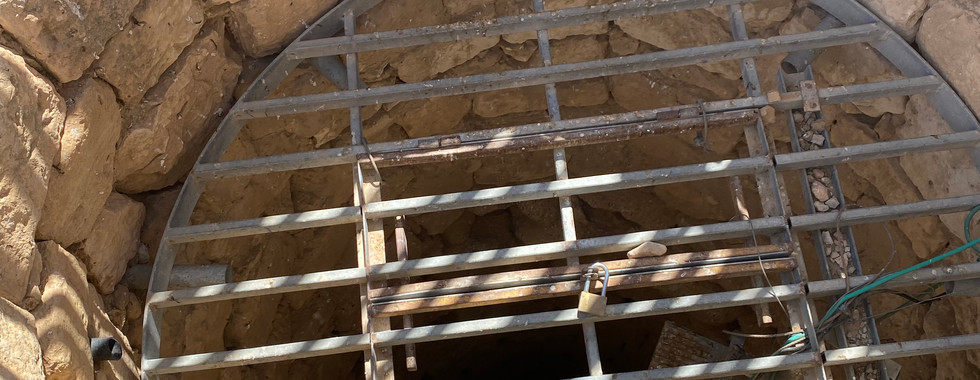


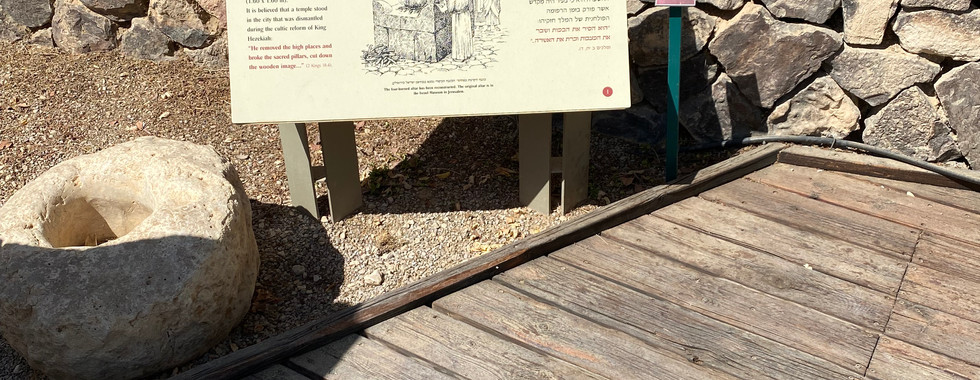
In Genesis 21, when Abraham hears about one of Abimelech's servants violently stealing one of his wells, Abraham did not retaliate. Instead, Abraham made a covenant with Abimelech by placing 7 female lambs in front of Abimelech.
It is interesting to note that in the Book of Leviticus (which is part of the Torah given on Mount Sinai), Hashem would designate female lambs to be one of the acceptable sin offerings that could be brought as a sacrifice by His Jewish Israelite people to atone for our sins.
Abraham set these lambs as a witness to Abimelech that he (Abraham) had dug the well, which Abimelech's servant had stolen. Abraham then named the place of the offering of the 7 ewe lambs, Be'er Sheva.
Be'er Sheva, when translated, means "well of sevens" or "well of oath."
Through the offering of the seven female lambs on behalf of the servant of Abimelech's sins, Abraham was making an oath of peace, not only to Abimelech, but also an oath to Hashem as well. Even though the Torah had not yet been officially given by Hashem at this point, sacrifices and other laws were indeed in place. Thus, through the offerings, the oath that Abraham was making to Hashem was to serve Him faithfully even when the enemy was allowed to steal the provision that Hashem had provided.
The Oath of a Grove:

We see proof of Abraham's faithfulness immediately, in that immediately Abraham planted a grove and called upon the name of Hashem. This action of faith by Abraham was Abraham's declaration to Hashem that he trusted that from death, Hashem would bring life and from loss, Hashem would bring provision.
Abraham's act of faith gives a living testimony of the faith that was accounted to Abram as righteousness in Genesis 15. For, nothing but faith in Hashem would make Abraham believe that in a dry and thirsty land, Hashem would make a large grove of trees to bloom.
Inside the Tel of Be'er Sheva there are a vast amount of holding "stalls" that are marked out for the stores of grain and other harvests. The sheer number of the holding stalls provided proof of Hashem's faithfulness to bless Abraham and later Isaac, who also lived in Be'er Sheva for a time.
Parallels that Point to Prophecy
Standing at the far end of history, we can see why the narratives of Ishmael and Abimelech are situated back to back here in Genesis 21. Just as Abimelech's servant stole the well from Abraham, so the descendants of Ishmael have been attempting to steal the wells from the Jewish people. These wells are not merely earthly and tangible, the wells of the Jewish people that have been trampled underfoot are the wells of promises and land, which Hashem (the Fountain of Living Water) has promised us in His word.
Whether it be for land, blessing, or the Holy Temple Mount, the war between Ishmael and Isaac rages on until this day.
The Test of Sacrifice:
Immediately after Abraham made the oaths in Be'er Sheva, Hashem tested Abraham's faith once more. Abraham had just lost a well. This well was given to Abraham in fulfillment of the promise that Hashem had made to Hagar. Then, in Genesis 22, we read that while in Be'er Sheva, Hashem called Abraham to offer up his son of promise, Isaac.
To understand how Abraham must have been feeling, we can consider the testimony of Job: When The Evil One sees the faithfulness of Job, it angers him. And so, the Evil One approaches Hashem and asks Him, "Does Job serve you for nothing? Take all that he has and he will curse you to your face and die." Hashem grants the Evil One's request and allowed him to destroy all that belonged to Job, yet Job's life was spared.
In the testing of Abraham through the near sacrifice of Isaac, Hashem was asking Abram to kill the one thing that Hashem had promised would bring eternal blessing, not only for Abraham, but for the whole world. Yet, without hesitation, Abraham brought Isaac to Mount Morriah (Isaac was likely in his twenties by the time of his "offering"). After proving that he was willing to offer up Isaac, Hashem provided a ram in the bush.
While more detail will be given in a different post, suffice it to say here that this ram is like a promise. This ram allows us to see in real-time the way in which Hashem promises and proves to provide a substitute in place of His beloved Jewish people instead of killing us or letting us die. Be it the land, the animal sacrifices, or His very own temple, Hashem always has and always will provide "a ram in the bush" and spare His beloved Jewish Israelites the death of sacrifice.
After the faithfulness of Abraham's willingness to offer up Isaac, Isaac went off into hiding and Abraham then again dwelt in Be'er Sheva.
Lessons Learned From Abram's Faith
In these trials and temptations, we can learn that Hashem protects what is His and what is from Him. Reading about the accounts of Hagar, Ishmael, Isaac, and Abraham helps us to better comprehend passages that say, "Blessed are those who take refuge in Hashem."
For, Hashem sets the hedge of horror and says to trials and evils, "You can come this far and no further."
He therefore keeps His people out of the way of eternal harm, thus always keeping His people and promises alive (even if only a remnant). If, at times the evil one is allowed to steal, pillage, plunder, and murder members of the Jewish community or our possessions, it is only for the purpose of fulfilling future promises.
For, when moshiach arrives, and Hashem returns, He promises to restore all that the enemy has stolen and everything the locusts have destroyed. Thus, if He did not allow some evil in the world that He has created, Hashem would not get to prove His might, power, love, and glory to full measure in the future.
However, just as Abraham offered up 7 ewe lambs and Hashem offered up the ram in place of Isaac, so Be'er Sheva gives us hope in the future of promised eternal peace of Hashem. Like the groves planted by Abraham in Be'er Sheva, those who abide in Hashem and keep His mitzvot will blossom forth an abundance of good fruits of righteousness.
Like sweet grapes and ripe figs, the sweetness of kept mitzvot are pleasing to Hashem and are the very thing that will transform this world of darkness into a place of peace, love and light--a place where Hashem will again want to come and dwell.
In this way, the land of Be'er Sheva reveals the promises of the eternal promised land of the Nation of Israel, even before the promised people or land were given.
Am Yisrael Chai!
Kimberly Davis

Comments